
Blog
.jpg)
Key takeaways:
Python development is an unusually easy category to fake. Nearly every generalist agency lists Python somewhere in a technology footer, because it costs nothing to claim and clients rarely check.
So the useful question is not who says they do Python. It is which python software development companies do it specifically enough that they would turn down other work, and that turns out to be a much shorter list.
The twelve firms below each list a US office location on their own site, and each names Python or Django as a current, deliberate specialism rather than one item in a stack of forty. Several are corporate members of the Django Software Foundation, which is a small but real signal you can verify yourself in about a minute.
Python is a general-purpose language, so hiring for it is really hiring for one of three quite different jobs.
The first is web application backends, usually Django or FastAPI, where you want a durable system with an admin interface, an ORM and predictable structure. The second is data and machine learning work, where Python is the default language and the skills overlap only partly with web engineering. The third is automation and integration, the scripts and pipelines that move data between systems nobody wants to touch.
A firm strong at one is not automatically strong at the others, and this is the single most common mismatch we see when a Python project goes wrong. It is also why python development outsourcing companies with broad service menus can disappoint on narrow, hard problems.
Scale matters here as well. Python's web frameworks are excellent at getting a working product in front of users quickly, and the questions that arrive later are usually about architecture rather than language, which is where decisions like serverless against Kubernetes start to shape your running costs.
One more piece of context is worth having, because vendors rarely volunteer it. Octoverse 2025 recorded a milestone that got less attention than it deserved: TypeScript moved ahead of Python on GitHub for the first time, which the report describes as the most significant language shift in over a decade. Python remains enormous and dominant in AI work, but a firm that talks about it as the inevitable choice for everything is selling rather than advising.
Three checks, applied to every candidate, with the failures documented rather than quietly dropped.
A US street address, taken from the company's own website rather than a directory card. Seventeen candidates failed this or the next test. One published only a PO box, one only a private mailbox suite, and several publish no address at all despite genuinely good reputations.
Current Python work named by the firm itself. A directory category is not evidence, since firms pivot and listings go stale. We dropped a well-known Chicago consultancy that lists Python among a dozen languages and is really a Ruby and Clojure shop, and another whose homepage never mentions Python at all.
Third, a location that matches the firm's own claims. One candidate presented as San Diego on its site while its own Clutch profile listed Odesa, Ukraine. That contradiction was enough to drop it, since the firm's two public statements about itself disagreed.
The same discipline applies on your side of the table once you shortlist, and our guidance on hiring a quality outsourced team covers the checks that come after this one.
Clutch figures appear throughout this list and are worth reading correctly, because they are widely misunderstood.
Clutch reviews are collected through interviews with clients the firm nominates, which makes them more reliable than anonymous ratings and still a curated sample. A 5.0 across three reviews and a 4.9 across sixty are not the same claim, and the review count matters more than the decimal.
Three firms here have no Clutch profile at all: Active Frequency, Tivix and Spry Group. That is a real gap in evidence, and it is not a quality signal. Directory presence measures marketing effort as much as it measures work.
Review volume and standing are also different things. REVSYS carries a perfect rating built on a single review, and it employs the current president of the Django Software Foundation, so the thin profile says nothing about the depth of the shop.
The table compares the essentials. The entries below carry the caveats, which is where the useful information usually sits.
| Agency | Best for | Main services | Typical clients | Pricing (from) | Clutch rating |
|---|---|---|---|---|---|
| VAULT | Python products needing strategy | Django, custom software, AI, UX | Startups, small business | $10,000+ | 4.6 |
| Six Feet Up | Long-horizon Python platforms | Python, AI, cloud, Plone | Enterprise, research, nonprofits | $50,000+ | 5.0 |
| Caktus Group | Django for social impact | Django, Python, product strategy | Nonprofits, NGOs, education | Undisclosed | 5.0 |
| Fusionbox | Exclusively Python engagements | Django, Python, web platforms | Government, finance, media | $75,000+ | 5.0 |
| REVSYS | Performance and rescue work | Django consulting, code review, AI | Startups, mid-market | $5,000+ | 5.0 |
| Idea Maker | Django plus everything else | Django, AI, mobile, React | Startups, SMB | $25,000+ | 4.9 |
| Culture Foundry | Python for publishers | Python, CMS, cloud, UX | Media, nonprofits, sport | $25,000+ | 5.0 |
| Imaginary Landscape | Small Django builds and support | Django, Python, React | Nonprofits, SMB | $10,000+ | 4.9 |
| Active Frequency | Senior-only small teams | Django, Vue, React | Media, education, SMB | Not listed | Not listed |
| Parthenon Software Group | Scientific and data-heavy Python | Python, web apps, integrations | Science, industrial, SMB | Undisclosed | 5.0 |
| Tivix | Larger distributed Django builds | Django, React, cloud | Enterprise, mid-market | Not listed | Not listed |
| Spry Group | Small mixed-stack projects | Django, PHP, Node.js | Small business, publishers | Not listed | Not listed |
"Not listed" means the firm has no Clutch profile publishing those fields, not that it declined to answer. Read the entries for what each firm actually does with Python.
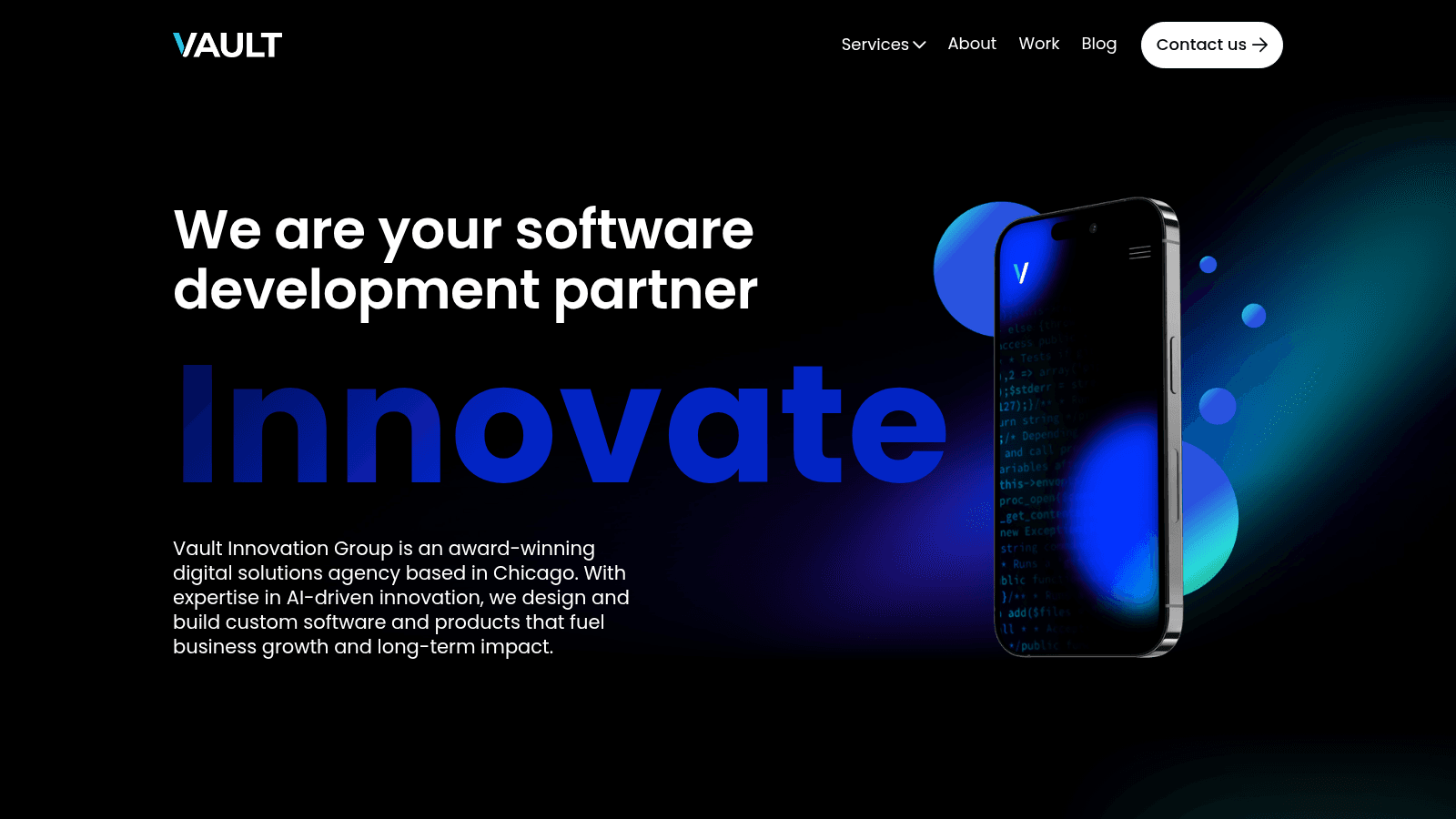
Best for: Python products that need a plan first
Overview: VAULT has been building software out of Chicago since 2012, and now runs a second engineering office in Raleigh, North Carolina.
Python and Django are a core part of our engineering practice rather than a side capability. Clutch records Django at 30% and Python at 30% of our technology focus, which is a reasonable description of what we spend our time on.
The clearest example is Leaf Trade, a two-sided wholesale marketplace for the cannabis supply chain. The stack is Django and Python over PostgreSQL, with Redis for caching, a forked Saleor commerce layer, React on the front end and a REST API, containerized on AWS. The client went on to raise $4.5 million, and the migration cut over with only a few minutes of downtime.
Core services: Django and Python web application development; REST API design and integration; AI and machine learning implementation; product discovery and UX research; data platform work; ongoing maintenance and optimization.
Industries served: cannabis supply chain, healthcare and medical records, edtech and college athletics, produce logistics, sports performance, data services.
Pricing: No rate card, deliberately, because Python scope varies too widely for one to mean anything. The figures on our Clutch profile are a $10,000 floor and an hourly band between $150 and $199.
Pros: a verified production Django stack rather than a claimed one; strategy, design and engineering under one roof; 14 years of continuous operation; two US offices; a 4.6 Clutch score drawn from 28 client interviews.
Cons: at 10 to 49 people we are smaller than several firms here and take on fewer projects at once; our Clutch schedule sub-score of 4.4 is our lowest, and some reviewers have flagged budget pressure when scope moved mid-project.
Notable projects: Leaf Trade wholesale marketplace, iCopy's Nimbus records platform, a data mapping system handling 28 million records for Nationwide Transfer.
Engagement model: we work hourly, on fixed cost, through staff augmentation, or on something shaped to the project. Python work almost always opens with discovery, because the data model decides the architecture and the architecture decides the bill.
How to start working with us:
Why we belong among python development companies in usa: we run Django and Python in production on systems handling real transaction and data volume, from two US offices, with the architecture decisions documented rather than improvised.
Final verdict: a good fit when the Python work sits inside a larger product question, and an unnecessary one if you have a settled spec and just need hands.
Contact us if you want a read on your architecture before you commit to it.

Overview: An Indiana firm at 11208 Windermere Blvd in Fishers, operating since 1999 and describing itself in its own page title as a Python and AI company. It is one of the few US shops with a genuinely long Python history.
Core services: Python and Django development; AI and data engineering; cloud architecture; Plone and enterprise content platforms.
Industries served: research institutions, nonprofits, enterprise, higher education.
Pricing: Engagements start at $50,000, billed between $200 and $300 an hour, a band matched only by REVSYS.
Pros: 5.0 across 26 Clutch reviews, the strongest rating-and-volume combination here; 26 years of Python-specific history; a corporate member of the Django Software Foundation.
Cons: the top rate band and a $50,000 floor put it out of reach for small projects, though Fusionbox asks for more up front; a small team at 10 to 49; its enterprise content-management heritage is not what every buyer needs.
Notable clients: research and higher-education institutions, enterprise content platforms.
Why buyers shortlist it: long-lived Python platforms where continuity over a decade matters more than launch speed.
Final verdict: the strongest all-round Python credentials on this list, priced to match.

Overview: A Durham firm at 108 Morris St founded in 2007, working almost entirely in Django, with a strong record in international development and public-interest work.
Core services: Django and Python development; product strategy and discovery; data systems for social programs.
Industries served: nonprofits and NGOs, education, international development, government.
Pricing: Clutch shows $150 to $199 an hour and leaves the minimum project size blank.
Pros: describes deep Django and Python expertise as its core rather than one service; a UNICEF Global Innovation Centre client called its Python and Django expertise world class; Django Software Foundation corporate member.
Cons: only 3 Clutch reviews, so the 5.0 rating rests on a very small sample; a small team; its nonprofit and NGO orientation may not suit a commercial product team.
Notable clients: UNICEF and other international development organizations.
Where it fits: mission-driven Django work where the data model carries real social consequence.
Final verdict: excellent Django pedigree with a thin public review base, which is a documentation gap rather than a quality one.

Overview: A Denver firm at 2031 Curtis Street operating since 2002, whose own homepage describes it as a US-based Python and Django consultancy and states plainly that it works exclusively in Python.
Core services: Django and Python development; web platform architecture; long-term application support.
Industries served: government and public agencies, financial services, media, telecommunications.
Pricing: Fusionbox publishes nothing itself, but its Clutch profile carries a $75,000 minimum at $150 to $199 an hour, the highest floor on this page.
Pros: exclusive Python focus, which almost no firm this size can claim; agency of record for the Colorado Lottery; named work with FirstBank, Delta Dental, National Geographic and Comcast; Django Software Foundation corporate member.
Cons: a $75,000 minimum is the steepest entry point here and rules out small projects; 10 Clutch reviews is a modest evidence base for a firm this established; the street address appears only in the site's structured data rather than in visible page text.
Notable clients: Colorado Lottery, FirstBank, Delta Dental, National Geographic, Comcast.
Its real strength: institutional Django systems that have to run for a decade.
Final verdict: among the most genuinely Python-committed firms in the country, with less public evidence than its work deserves.

Overview: A Kansas firm at 2205 Killarney Court in Lawrence, describing itself as performance tuners, Django and Python experts, infrastructure and AI architects. The current president of the Django Software Foundation, Jeff Triplett, works there.
Core services: Django consulting, development and support; Python and Django code review; performance tuning; AI development and consulting; open-source support.
Industries served: startups, mid-market software companies, open-source projects.
Pricing: Clutch records a $5,000 minimum, the lowest on this page, charged at $200 to $300 an hour, which is the steepest band on it.
Pros: arguably the deepest Django community standing of any firm here; an explicit code-review and performance-rescue practice, which is unusual and useful; Django Software Foundation corporate member.
Cons: its 5.0 rests on a single Clutch review, which is almost no public evidence; at 2 to 9 people capacity is genuinely limited; its consulting and rescue orientation may not suit a ground-up build.
Notable work: Django performance and architecture consulting, open-source maintenance.
Where it beats the alternatives: an existing Django application that has become slow, fragile or unmaintainable.
Final verdict: the first call when you already have Django in production and it is hurting.

Overview: An Irvine firm at 17875 Von Karman Ave with further offices in Los Angeles and Dallas, founded in 2016, running a dedicated Django practice inside a broader agency.
Core services: Django and Python development; AI integration; mobile development; React front ends; WordPress.
Industries served: startups, professional services, e-commerce, healthcare.
Pricing: Nothing below $25,000, with hourly work in the $100 to $149 range.
Pros: 4.9 across 27 Clutch reviews, second only to our own 28 on this page; three US offices; a dedicated Django services page rather than a passing mention.
Cons: a full-service shop where Django sits alongside mobile, AI, React and WordPress, so Python is one practice rather than the identity; founded in 2016, the youngest firm here; breadth can mean less depth on hard Python problems.
Notable work: production-ready Django web applications for startups and established companies.
Why it made this list: a Django build that also needs mobile or front-end work from the same team.
Final verdict: the most conventionally well-reviewed firm here, and the least Python-exclusive.

Overview: A Seattle firm at 5101 14th Avenue NW founded in 2010, with a dedicated Python capability page and a client list weighted toward publishers and membership organizations.
Core services: Python development; content platform and CMS engineering; cloud infrastructure; UX and design.
Industries served: media and publishing, nonprofits and associations, sport, education.
Pricing: Projects open at $25,000, though no hourly figure appears on its profile.
Pros: a perfect 5.0 across 15 reviews with even sub-scores; named Python clients including NCWIT, the New York Racing Association and Library Journal; a genuine Seattle base.
Cons: no published hourly rate, which makes budget comparison harder; its publishing and content orientation is a narrower fit than it first appears; Python sits alongside a general digital agency practice.
Notable clients: NCWIT, New York Racing Association, Library Journal and School Library Journal.
What it is genuinely good at: Python behind content and membership platforms with real editorial complexity.
Final verdict: a strong choice for publishers, and a stretch for a data-engineering brief.
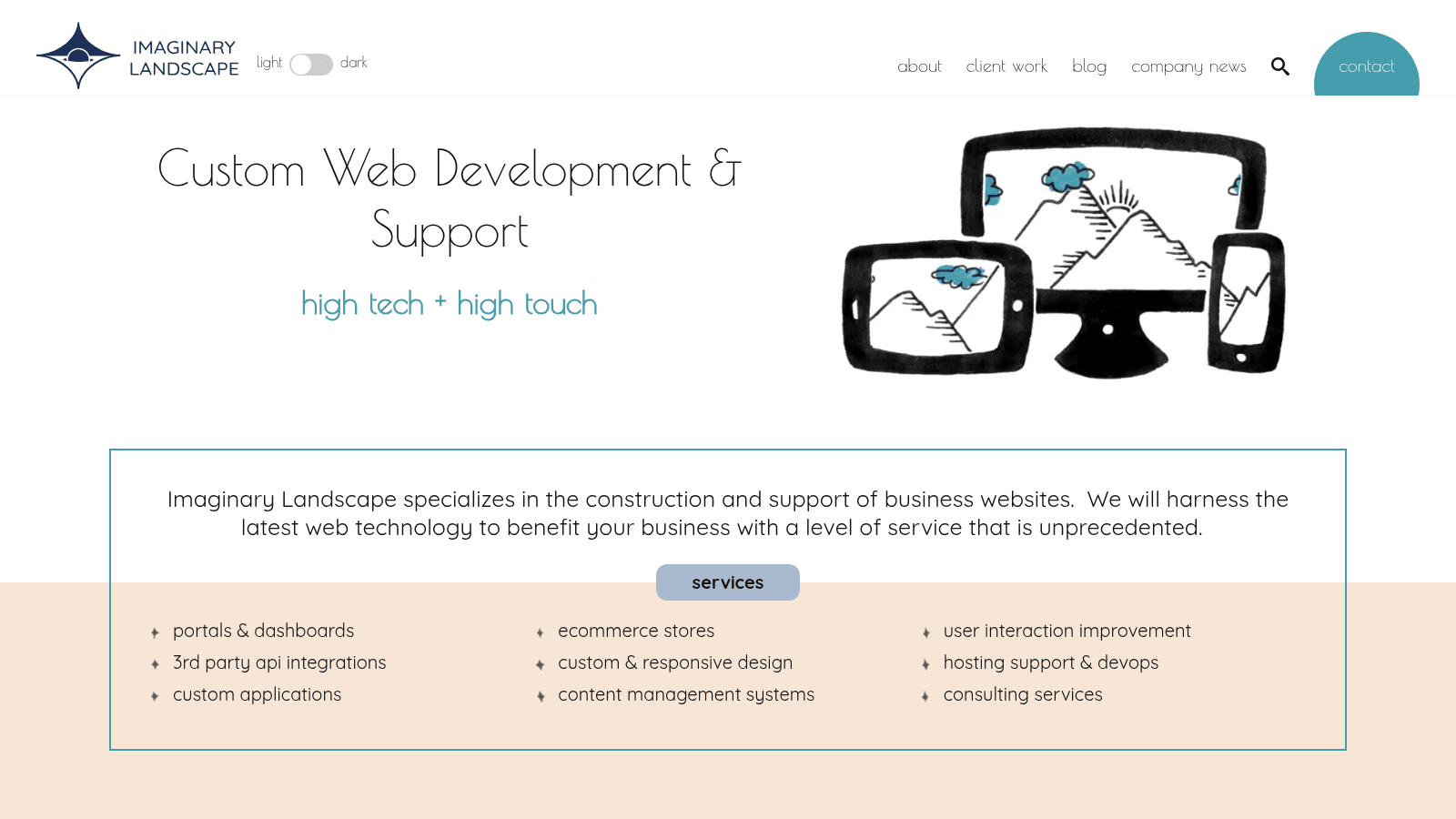
Overview: An Evanston firm at 909 Davis Street that has been building for the web since 1995, making it the oldest company on this list, with Python and Django named in its own page title.
Core services: Django and Python development; React front ends; ongoing web application support.
Industries served: nonprofits, associations, small and mid-sized business.
Pricing: The floor sits at $10,000 and the rate between $100 and $149, pairing the lowest rate band here with a modest entry point.
Pros: three decades of continuous operation, since 1995; an explicit statement that it specializes in Python and specifically Django; a low entry point for small Django work.
Cons: only 5 Clutch reviews; its Clutch cost sub-score of 3.7 is the lowest among the firms here that publish one, and worth asking about directly; a small team serving mostly smaller organizations.
Notable work: Django applications and long-term support for nonprofits and associations.
Why it earns a place here: small Django builds and maintenance where a $10,000 project is welcome rather than tolerated.
Final verdict: a practical option for modest Django work, with a cost sub-score that deserves a direct question.
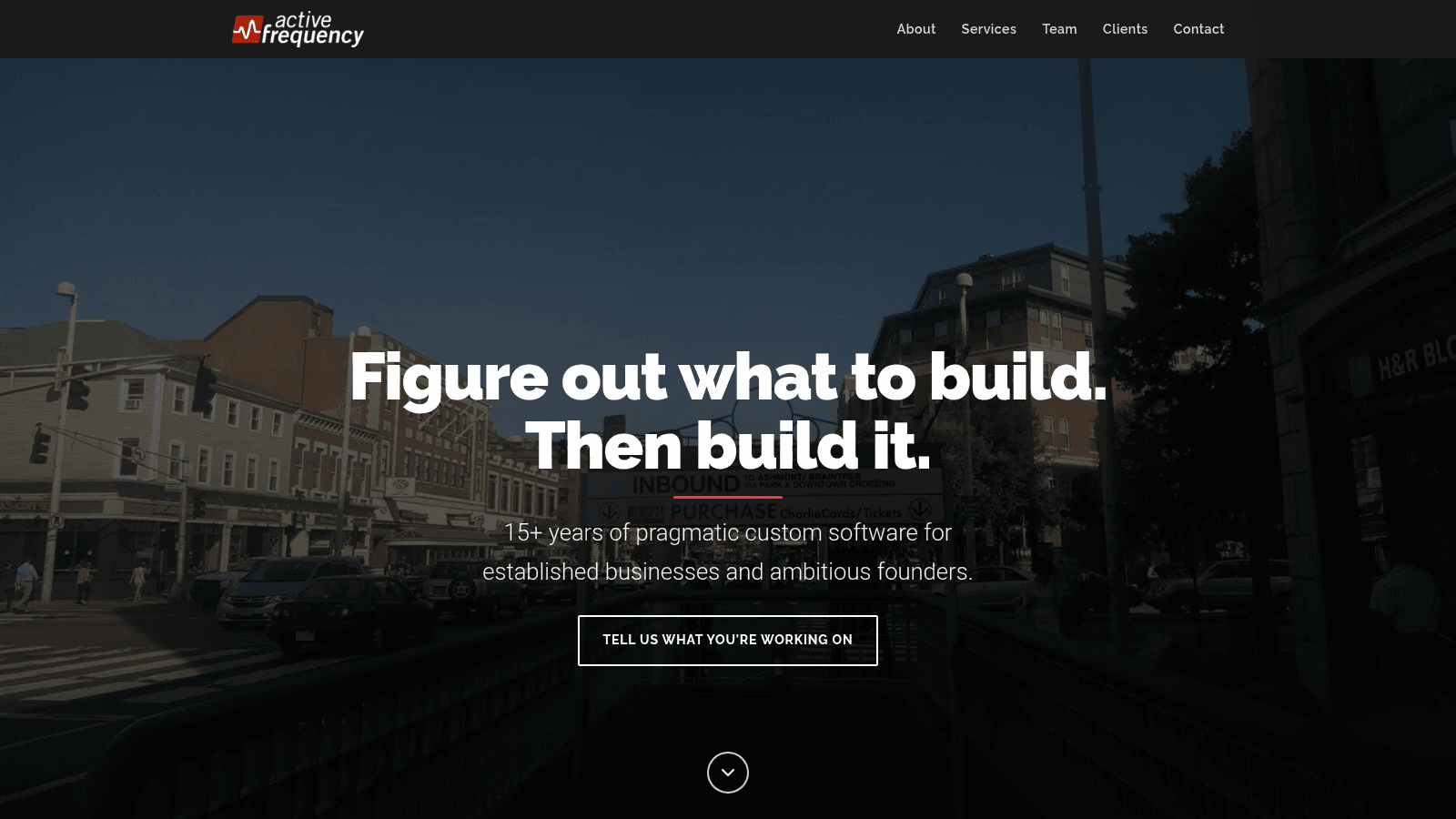
Overview: A Cambridge firm at 686 Massachusetts Ave founded in 2009, which states openly that it is five people with no handoffs, and pairs Django with Vue or React.
Core services: Django and Python development; Vue and React front ends; product engineering for small teams.
Industries served: media and publishing, education, equipment rental and services.
Pricing: Unpublished. At five people, pricing is a conversation rather than a page.
Pros: an explicit senior-only model where the people who sell the work do it; a direct Django specialization statement linking to the framework's own site; named clients including The Harvard Crimson and LensProToGo.
Cons: five people total, so capacity is genuinely limited and timing may not suit you; no Clutch profile or public review record; no published pricing.
Notable clients: The Harvard Crimson, LensProToGo.
Where it fits: a well-defined Django project where you want senior engineers and no account layer.
Final verdict: an excellent small-team option if they have room, which is the main risk.
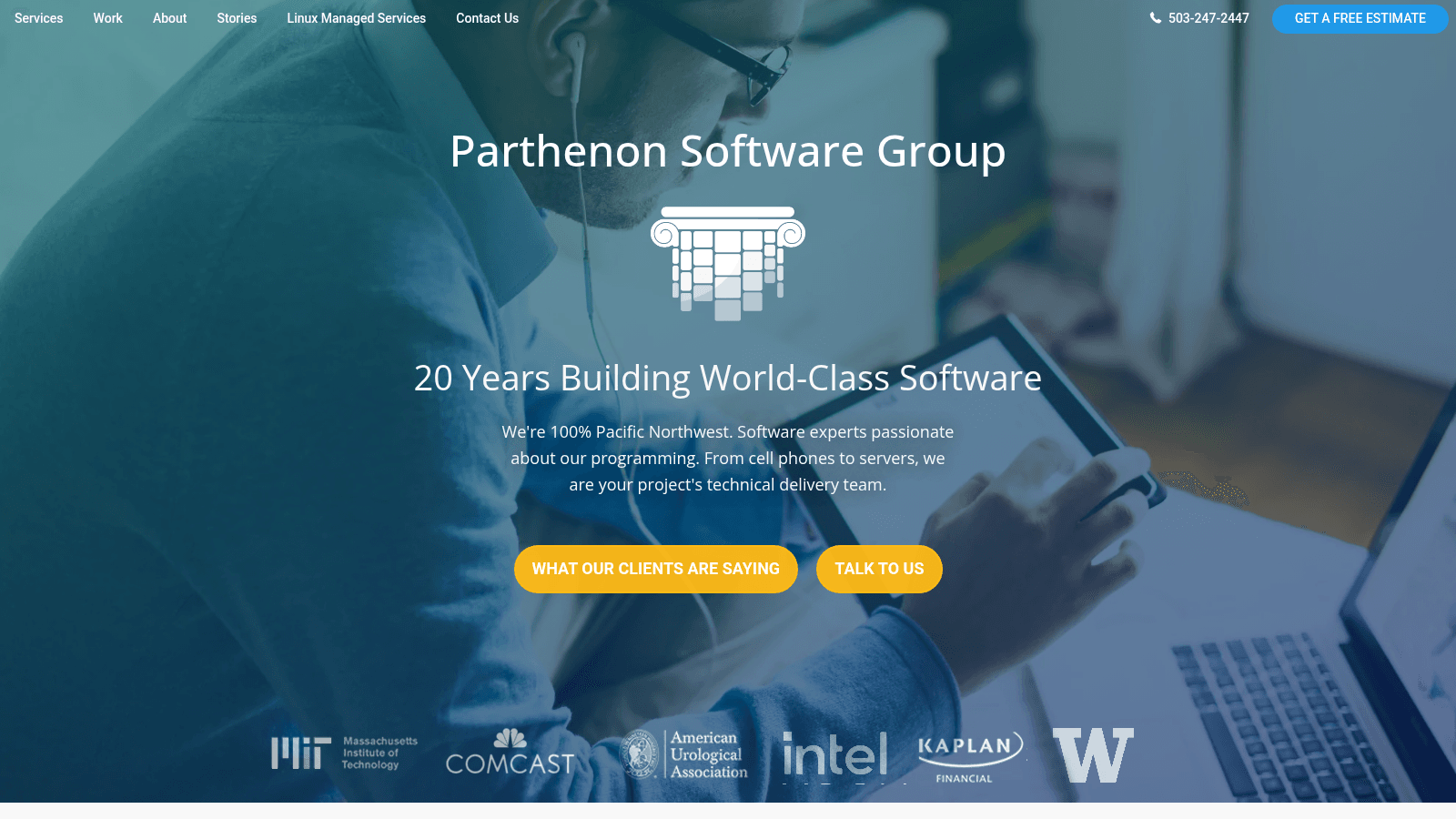
Overview: A Vancouver, Washington firm at 600 Hatheway Road founded in 2006, with Python work weighted toward scientific and data-heavy applications.
Core services: Python development; web application engineering; systems integration; data tooling.
Industries served: scientific instrumentation, industrial, small and mid-sized business.
Pricing: Between $100 and $149 an hour, with the minimum left unstated.
Pros: 5.0 across 5 Clutch reviews; documented work sampling millions of scientific data points through an adaptive algorithm in a Python 3 control panel; strong integration experience.
Cons: its Python evidence is a single named project rather than a dedicated practice page, the weakest Python signal among the firms we kept; only 5 reviews; no published minimum, so budget fit is unclear until you ask.
Notable work: a scientific data control panel built with Python 3 and AngularJS.
Why buyers shortlist it: Python against instruments, sensors and scientific data rather than consumer web.
Final verdict: a good technical fit for data-heavy work, with thinner public Python evidence than the firms above it.

Overview: A San Francisco firm at 600 California Street founded in 2008, at around 110 people the largest on this list, naming Django as a favored backend framework.
Core services: Django and Python backend development; React front ends; cloud and DevOps; agile product delivery.
Industries served: enterprise, energy, nonprofits, technology.
Pricing: No public figures at all, and no directory profile carrying them.
Pros: the largest team here, so it can staff bigger Django programs; an explicit Django section in its backend services; a genuine San Francisco address.
Cons: its own about page describes a largely Poland-based engineering team alongside the San Francisco office, so confirm where your engineers sit; multiple search sources report it was acquired by an India-listed IT firm, which its own site does not mention; no Clutch profile or published rates.
Notable work: Django and React product builds for enterprise and nonprofit clients.
Why it earns a place here: larger Django programs that need more engineers than a boutique can supply.
Final verdict: real Django capability at scale, with ownership and delivery-location questions to settle before you sign.
Overview: A four-person Brooklyn studio at 996 Hancock St founded in 2012, working across Django, PHP and Node.js from what it calls a home office.
Core services: Django and Python development; Drupal and WordPress; Node.js and API work.
Industries served: publishers, small business, nonprofits.
Pricing: Nothing listed publicly, which is normal at this size.
Pros: names Python and Django explicitly as a specialization alongside PHP; a very small team means direct access to the people building; a verifiable Brooklyn address.
Cons: Python is one of roughly nine backend technologies it lists, so the specialization claim is thinner here than anywhere else on the page; around four people, so capacity is minimal; no Clutch profile, no published pricing, and be careful not to confuse it with a similarly named firm on a different domain.
Notable work: mixed-stack web projects for publishers and small organizations.
Where it fits: a small project where a mixed Python and PHP estate needs one team.
Final verdict: included for smaller mixed-stack work, and the least Python-focused firm here.
The framework a firm reaches for tells you what kind of work it does, and the ground has shifted recently.
The Python Software Foundation and JetBrains run an annual Python Developers Survey with more than 30,000 respondents. Its most recent results put web development at 46% of Python use cases, behind data analysis at 48% and ahead of machine learning at 41%. Among web frameworks, FastAPI grew from 29% to 38%, the largest jump of any of them.
That growth is worth interpreting rather than just reporting. FastAPI is lightweight, async and built around API delivery, which suits teams shipping model endpoints and services. Django is a batteries-included framework with an admin interface, authentication and an ORM in the box, which suits applications with real business logic and long lives.
So a firm leading with Django is usually telling you it builds products. A firm leading with FastAPI is usually telling you it builds services and machine-learning infrastructure. Neither is better, and hiring the wrong one produces a competent team solving a different problem than yours.
Most of the firms above lead with Django, which reflects the shape of agency work rather than the whole Python world. If your project is really an inference API, say so early and ask specifically about FastAPI experience, because the architecture decision is far more expensive to reverse than the framework preference that drove it.
Our own Django work sits at the product end of that split. Leaf Trade is a two-sided marketplace with a REST API, bulk ordering and a migrated production database, which is the shape of application Django's batteries-included design exists to serve.
Published rates on this list run from $100 to $300 an hour, and the pattern is clear enough to plan around.
| Firm profile | Typical hourly | Typical minimum | What you get |
|---|---|---|---|
| Specialist boutique, 4 to 15 people | $150 to $300 | $5,000 to $75,000 | Senior engineers, little account overhead |
| Mid-size agency, 15 to 50 people | $100 to $199 | $10,000 to $25,000 | Mixed seniority, design and PM included |
| Larger distributed firm, 50+ | Often unpublished | Often unpublished | Capacity, and a delivery-location question |
| No published rate | Unknown | Unknown | Ask first; three firms here fall in this group |
The top of that range belongs to Six Feet Up and REVSYS, both of which carry perfect Clutch ratings, and that is the opposite of a coincidence. Deep Django specialists price on scarcity, and there are not many of them.
The more useful budgeting move is to size the engagement rather than the rate. A well-scoped Django build with a clear data model is usually cheaper at $250 an hour than a vague one at $120, because most Python overruns come from requirements that moved rather than from engineering that was slow.
That is the reasoning behind how we structure development engagements, and it is worth asking any firm on this list how they handle a scope change before you need to know.
Sort by the job first, since it eliminates most of the list immediately.
For a durable Django product, look at Six Feet Up, Fusionbox, Caktus and ourselves. For an existing Django application in trouble, REVSYS is the specialist. For publishing and content platforms, Culture Foundry. For scientific or instrument data, Parthenon. For a small budget, Imaginary Landscape or Idea Maker. For a larger program needing headcount, Tivix, with the ownership question settled first.
The groupings matter more than the ranking, because these python development firms are not really competing with each other. They are competing for different projects.
Next, decide how much evidence you need. Three of these python development agencies have no public review record, which is fine if you are willing to take references directly and a problem if your procurement process requires third-party validation.
Finally, be honest about whether you need an agency at all. If the work is continuous rather than a project, hiring may be cheaper within a year, and that decision turns on whether you are ready to build a technical team rather than on any firm above.
Published hourly rates among the firms here run from $100 to $300, with minimum project sizes from $5,000 to $75,000 where they are published at all. Specialist Django boutiques sit at the top of that range and generalist python development firms with a Django practice sit at the bottom.
Four of the twelve publish no hourly rate. That is common among small consultancies that fill capacity through referrals, and it means budget conversations start with a call rather than a page.
Open the offices or contact section of the company's website and look for a numbered street address, not a city name in a page title. Then compare it against the directory profiles, because contradictions are the strongest signal available: one dropped candidate claimed San Diego on its homepage while its own Clutch listing gave Odesa, Ukraine.
Then ask where the engineers physically sit, which is a different question from where the company is registered. Several US-headquartered python development outsourcing companies run engineering teams abroad, and the good ones tell you without being pushed. The same verification habit applies when you hire an individual developer rather than a firm.
Hire a specialist when the Python work is the hard part, meaning complex data models, performance problems, scientific computing or an existing Django codebase that needs rescuing. Specialist python development agencies price higher and finish faster on exactly that kind of work.
Hire a generalist when Python is simply the backend for a product whose difficulty lies in design, mobile or integration. Plenty of buyers hire python development companies for work that was never really a Python problem.
The mistake to avoid is hiring on the language when your actual risk is elsewhere, which produces a team that writes excellent Python solving the wrong problem.
For applications with real business logic, user accounts and an administrative interface, yes. Django's built-in admin, ORM and authentication remove months of work that you would otherwise write and maintain yourself.
FastAPI is the better fit for API-first services and machine-learning endpoints, and it has grown fastest in recent survey data. The decision should follow the workload rather than fashion.
Ask which framework they would choose for your project and why, then listen for whether the answer is about your workload or about their preference. Ask to see a Django or Python application they still maintain, since maintenance reveals more than launches.
Also ask who owns the code and the infrastructure accounts, and how they handle database migrations on a live system, because that last answer separates teams who have run production Python from teams who have written it. Their answer should also make clear where custom software genuinely pays off against configuring something existing.
The fastest way to tell a strong Python team from a plausible one is to put your actual schema in front of them and watch which questions come back.
Contact us and we will do that with you, then tell you honestly whether this is work we should be doing or work that belongs with a specialist above.


