We build custom software, implement AI automation, and modernize systems for B2B companies, then prove it works with performance metrics, not promises.
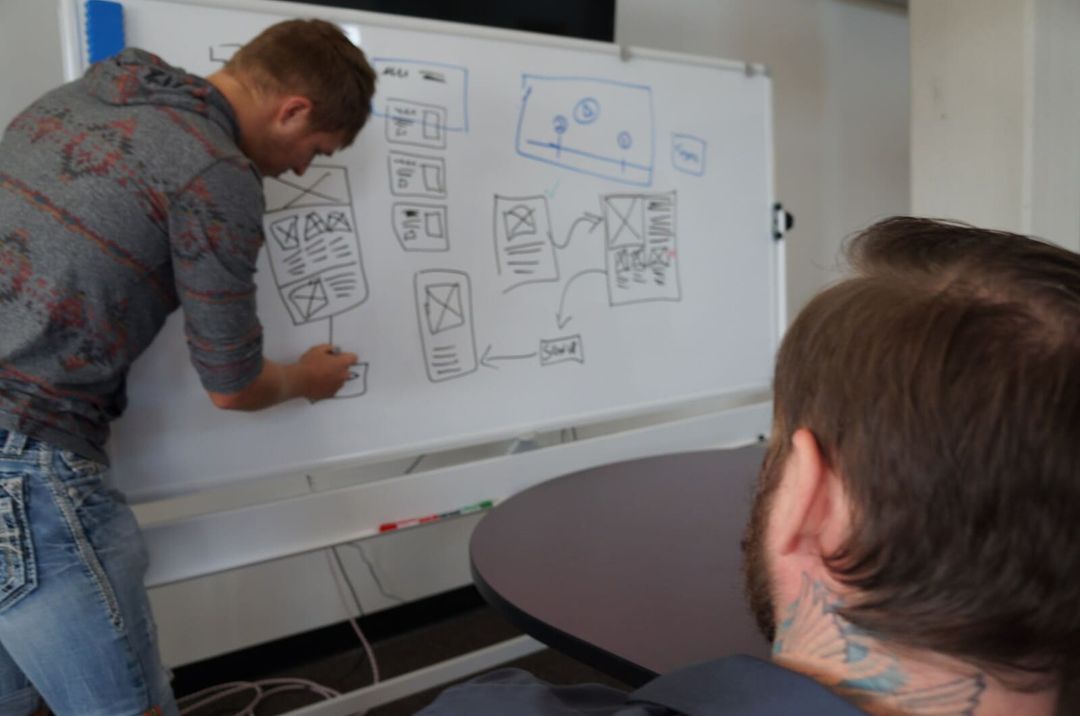


Almost nobody searches for a custom software development company in Chicago as a first step. By the time a team reaches out they have usually tried something already. These are the six situations we get called into most, roughly in the words the callers use.
A previous team shipped something that demos well and falls over in production. Nobody still on the project wrote the original code, the estimate to finish keeps moving, and every conversation about it starts with an apology. This is the most common reason a first call happens at all.
The code is rarely the whole problem. More often the original scope was agreed verbally, changed four times, and never written down anywhere, so there is no shared definition of finished to estimate against. We start by rebuilding that definition before quoting anything.
A model demoed well, leadership got excited, and it never reached a user. In our experience the blocker is almost never the model. It is data that was never clean enough to run on, and a workflow nobody redesigned around the output.
The demo ran on a hand-picked sample. Production data has gaps, duplicates and categories nobody documented, and accuracy falls the moment it meets reality. The second blocker is adoption: a prediction nobody has a process for acting on changes nothing, however good it is.
You need three engineers this quarter. The roles have been open for months, the Chicago market for senior developers is competitive, and the work is not waiting for your hiring pipeline to catch up.
Usually two of the three roles are genuinely permanent and one is a burst of work that will not exist in nine months. Splitting them, hiring for the first two and covering the third with embedded engineers, is cheaper than hiring three people and carrying one of them past the need.
Something built quickly to test an idea is now carrying paying customers. Every new feature costs more than the last one did, and the team has started routing around the codebase rather than changing it.
The MVP was not built badly, it was built to answer a question it already answered. The expensive mistake is rewriting all of it. Usually one or two parts carry the load and the rest is fine for years, so the work is identifying which is which before anyone opens an editor.
Your people run the real process in spreadsheets alongside the system that was supposed to replace them. That gap is usually where the actual requirements have been hiding.
The spreadsheet is the specification. It shows the exceptions, workarounds and approvals the original requirements document left out, because those were the things everyone already knew and nobody thought to write down. We read it before we design anything.
A product was built to a specification rather than to a problem. The usage numbers are telling you so, and the roadmap is full of features intended to fix that by addition.
Adding features to an unused product usually makes it less used. A short round of real user interviews tends to cut the roadmap rather than extend it, which is uncomfortable and considerably cheaper than building the next six things.
Six practices, delivered by one Chicago team rather than handed between vendors. Most engagements use three or four of them at once, which is the argument for not splitting strategy, design and engineering across three suppliers.
Contact us
Business systems built to how your operation actually runs: internal platforms, workflow and approval tools, integrations between systems that were never meant to talk, and the reporting layer that finally makes the whole thing measurable. This is the bulk of what we do and where most Chicago custom software development projects start.

Customer facing web products, operator dashboards and two-sided marketplaces, built to hold up once real traffic and real data arrive rather than only in a demo. We moved Leaf Trade from an ad hoc build onto a new platform and built it into a funded marketplace, including the ordering, cart and bulk purchase flows underneath it.

Native iOS and Android products, including hardware connected apps where firmware and software have to be designed against each other. On Neuropeak Pro that meant our team leading the coordination between the app engineers and the third-party hardware developers, rather than two vendors blaming a Bluetooth stack.

Automation, predictive analytics and natural language work, scoped against your data rather than against a demo. We open with whether the data can carry the use case and whether anyone will change how they work to use the output, because those are what stop pilots, not model choice.

Taking on software somebody else wrote, stabilizing it, and moving it forward without a rewrite you cannot afford. We start by understanding why it was built that way. Sometimes the answer is a constraint that still applies, and a team that opens with a rewrite quote has not checked.

Research, prototyping and validation before the expensive part starts. This is the phase that reshaped Leaf Trade from a simple MVP into a platform its users praise, and on iCopy the clickable prototype doubled as the asset iCopy pre-sold its new service model with.












Four projects built by this team out of Chicago. Every figure below is published on that project’s own case study page, so click through and check it rather than taking the number off this page.
We do not publish our clients’ head office locations, so treat these as our work rather than as a claim about which city each company sits in. What they do evidence is range: a funded marketplace, a healthcare platform that grew revenue tenfold, a data pipeline measured in tens of millions of records, and a subscription platform for the produce trade.




Three steps to a plan, then phased delivery. The part most agencies leave out is at the bottom.
How we handle scope changes. Scope moves on almost every software project, and pretending otherwise is how budgets get broken quietly. We price and sequence in phases so a change is a decision you make at a milestone with the cost in front of you, rather than something you discover in an invoice. Our Clutch reviews are public, including the ones that mention budget and schedule, and we would rather you read them before the call than after it.
You talk to product people and an engineer rather than a sales rep, often the same day you get in touch. We want to hear the problem before the feature list, because the feature list is usually somebody’s first guess at a solution and it is worth testing.
You get a custom development plan within a week: scope, sequence, the team assigned, what the first milestone proves and what it costs. The plan is yours whether or not you continue with us, which is deliberate. It is hard to compare quotes when nobody will write down what they actually mean.
Phased execution with the named engineers who will do the work, not a bench you never see again after the pitch. You get a working increment early rather than everything landing at the end, because that is what makes a change of direction affordable instead of catastrophic.
For moving scope or ongoing support. Billed by time worked, so you can stop any time. Harder when you need a fixed budget first.
For a build with a clear finish line. One price per phase, agreed up front. Harder when each mid-phase change means a re-quote.
For engineers working inside your own team. Billed monthly per engineer, rolling with notice. Harder when nobody on your side can direct the work.
For discovery, a first release, then a live roadmap. Fixed to launch, then hourly or monthly. Harder for projects under about six months, where the model is overkill.
A short conversation with an engineer and a product person, not a sales sequence. If we are not the right fit we will say so on that call. Or call 312‑298‑9598, or visit us at 20 N Wacker Dr in Chicago.
Contact us

Connect with one of our product specialists today.